

Service 05 — Therapy Web Design
Branding & Website Strategy
A practice identity that feels like you and a plan for what the website should actually do.
The Problem
The barrier.
- Visitors can't tell within five seconds who you help or what you treat.
- Credentials, fees, and session format are buried on a page nobody reaches.
- The booking step is a plain contact form at the very bottom of the homepage.
- The tone feels either clinical and cold or generic and stocky — neither builds trust.
The Solution
The clarity.
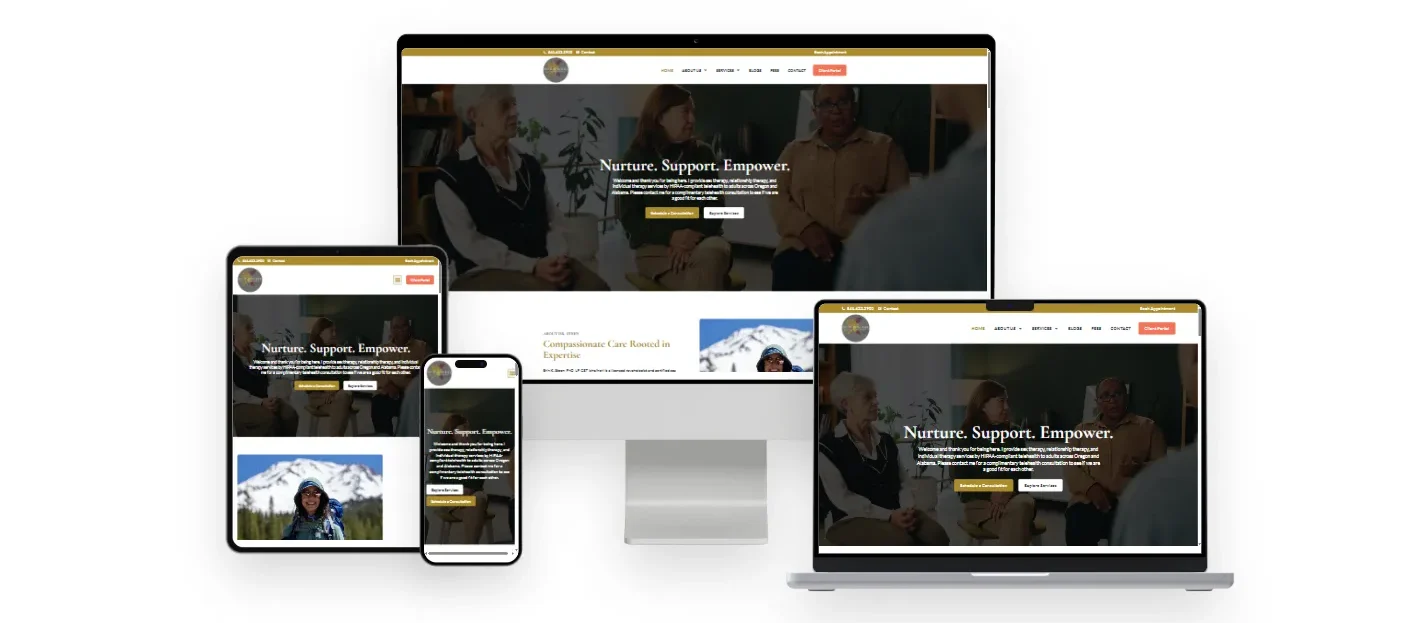
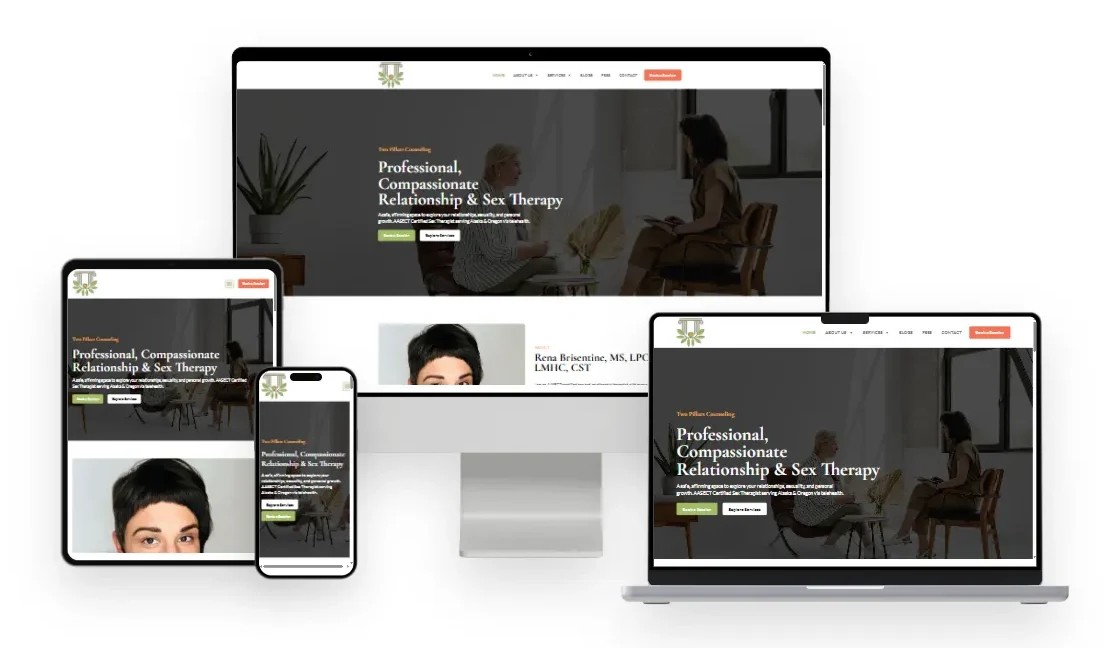
I design therapy websites around one job: helping the right person feel confident enough to take the first step.
- A homepage structured around who you help, what a session looks like, and how to start.
- Trust signals — licensure, approach, fees, session format — placed where people are deciding.
- Plain-language service pages that read like you talk, not like a directory listing.
- A booking pathway that is never more than two taps away from any screen.
The Problem
The barrier.
Without a defined identity and strategy, every design decision becomes a matter of taste, and every page ends up saying something slightly different.
- Colors, fonts, and imagery change from page to page and platform to platform.
- The practice sounds interchangeable with every other listing in the area.
- There's no agreement on what the website is supposed to achieve.
- Each new service or clinician gets its own inconsistent one-off page.


The Solution
The clarity.
I define a small, durable identity and a written website strategy, then design against both so the site stays coherent as you grow.
- A focused visual identity: palette, type scale, imagery direction, and logo usage.
- A positioning statement that says who you help and how you work, in your voice.
- A website strategy document: goals, audience, page map, and conversion points.
- Reusable page templates so future services or clinicians stay on-brand.
My Process
A structured journey.
01
Discover
We work through your practice values, ideal client, tone, and competitive landscape.
02
Position
I write the positioning and messaging framework the whole site will follow.
03
Design Identity
Palette, typography, imagery direction, and core components are defined.
04
Systemize
Everything is delivered as reusable templates and a short brand guide.
My Process
A structured journey.
Visual Identity
Palette, type scale, and imagery direction built for calm and credibility.
Messaging Framework
Headline, positioning, and tone guidance you can reuse everywhere.
Website Strategy Doc
Goals, audience, page map, and conversion points, written down.
Page Templates
Reusable layouts for clinicians, specialties, and locations.
Brand Guide
A short, practical PDF rather than a fifty-page deck.
Scalable System
Designed so the site still looks intentional after ten more pages.
My Process
Proven impact.
Do I need branding before a website?
Not always. For a solo practice, a light identity defined during the website project is usually enough.
Do you design logos?
I design clean wordmark-style logos suited to therapy practices. For illustrative or complex marks I’ll refer you out.
What do I actually receive?
A brand guide, logo files, a defined palette and type scale, and a written website strategy document.
Will this work for a group practice?
Yes — group practices benefit most, because templates keep every new clinician page consistent.
Other Services
Your practice deserves
a website that works
as hard as you do.
Your practice deserves a website that works
as hard as you do.
Let’s create a modern online presence that represents your practice, builds trust, and helps potential clients take the next step.